Carson
Big BrotherCarson is Edison’s only child, a son who reconnects with his father shortly before Travis’s stroke but remains estranged from him. His later appearance at Edison’s memorial initially seems to offer the possibility of renewed family ties; his conduct there instead leaves the narrator questioning what he wanted from his father and from the family he had never known.
Identity and Background
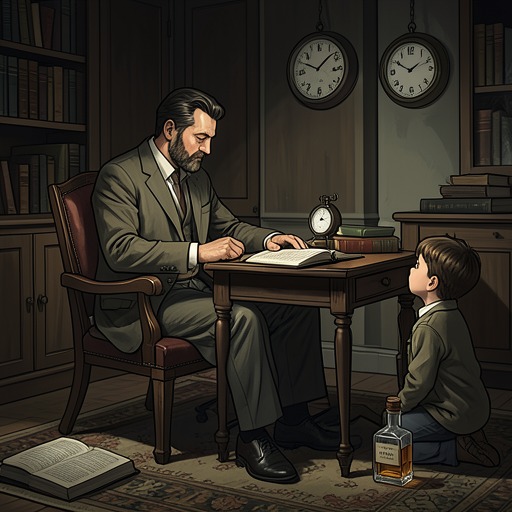
At nineteen, Carson sought out Edison at Three Bars in Four-Four, where his father still gathered with friends. He located Edison on his own, rather than being brought to Iowa by the narrator, and the encounter briefly revived Edison’s hope of building a relationship with his only child. The narrator had imagined that Carson might be trying to understand his origins or fill a void in his childhood, but recognizes that this explanation may have been too generous.
Carson gave Edison contact details at the club, but they proved false, and he did not get in touch again. The narrator assumes he may have been shocked by the sight of his father’s severe obesity, which did not fit the image of an ideal dad. The encounter thus opened a door only to leave Edison without a way to follow up.
Appearance at Edison’s Memorial
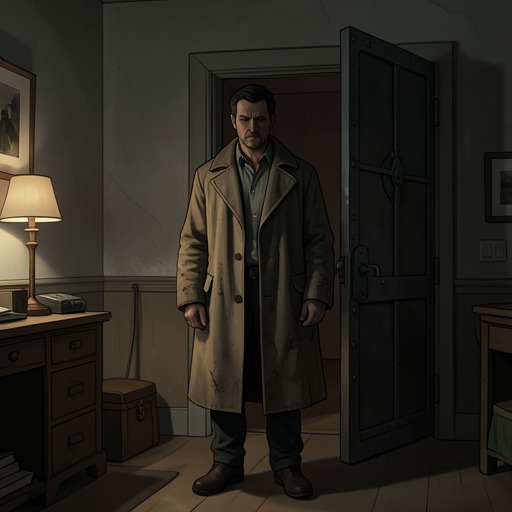
Carson reappears at Edison’s well-attended memorial at Three Bars. Tall, underfed, and marked by the bright, textured hair his father had at the same age, he offers condolences with apparent earnestness. The narrator hopes his attendance might partly make amends for breaking Edison’s heart, while acknowledging that Edison had likely hurt Carson repeatedly and that Carson had endured much of his life effectively fatherless.
That first impression gives way to suspicion. Cody tells the narrator that Carson spent twenty minutes asking what make of car she drove, whether the family had a swimming pool, and whether the narrator’s company had ever made the Fortune 500. Tanner then reports seeing Carson slip three bottles of wine into his backpack. Neither observation proves why Carson came, but together they unsettle the narrator’s readiness to welcome him into the family.
Conduct and Uncertain Motives
After Edison’s fellow musicians give passionate, halting tributes, Carson’s lavish praise of Baby Monotonous disrupts the memorial’s jam session by talking over the music—the very behavior Edison had often condemned. Fletcher eventually rescues the narrator from the exchange. By then, Carson is suggesting that the narrator establish a grant program in Edison’s honor to fund aspiring jazz musicians.
The proposal makes the narrator reconsider the purpose of Carson’s earlier search. Perhaps he had been looking for family resources, she thinks, though Edison conspicuously had little to offer. She does not settle on that explanation: jazz may have been a genuine point of connection between father and son, and Carson’s opportunism, if that is what it was, may have been another misfortune Edison had helped bring upon himself through neglect. Carson remains difficult to read because the evidence supports both a possible interest in his father and a deeply transactional approach to the family around him.
Relationship and Narrative Significance
Carson’s brief contact with Edison carries disproportionate weight because it briefly seems to answer Edison’s longing to know his son. The false contact details and subsequent silence turn that hope into another rejection, while the memorial offers the narrator a second, more complicated chance to imagine Carson as part of the family. Her initial impulse to enfold him meets the testimony of Cody and Tanner and is replaced by doubt.
Through Carson, the narrative complicates any simple account of a neglected father and an abandoned child: Edison’s failures as a parent matter, but Carson’s motives remain uncertain rather than neatly absolving either of them. His appearance also tests what family remembrance can mean. At a memorial sustained by musicians’ tributes and a shared jam session, Carson’s talk of a grant program and apparent interest in material advantages pull attention away from the music Edison valued. The episode leaves the narrator grieving not only Edison’s death but the relationship that, for a moment, seemed possible and never took shape.